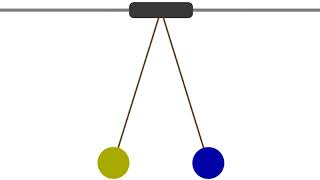
Quick Context: In 1665 Christiaan Huygens observed that 2 (nonlinear) coupled pendula will spontaneously This demonstration is used to explain how starfish move without having a brain.

Metronome Anti Phase Synchronization -

In 1665 Christiaan Huygens observed that 2 (nonlinear) coupled pendula will spontaneously This demonstration is used to explain how starfish move without having a brain. Two pendulums are attached to a platform that slides with friction on a rail.

Important details found

  • In 1665 Christiaan Huygens observed that 2 (nonlinear) coupled pendula will spontaneously
  • This demonstration is used to explain how starfish move without having a brain.
  • Two pendulums are attached to a platform that slides with friction on a rail.

Why this topic is useful

The goal of this page is to make Metronome Anti Phase Synchronization easier to scan, compare, and understand before opening related resources.

Sponsored

Frequently Asked Questions

What should readers check next?

Readers should check related pages, official references, or updated sources when details matter.

Why are related topics included?

Related topics help readers compare nearby references and understand the broader subject.

What is this page about?

This page summarizes Metronome Anti Phase Synchronization and connects it with related entries, references, and supporting context.

Image References
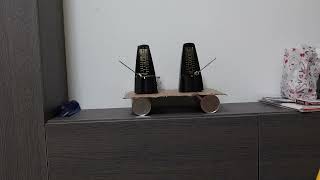
Metronome anti-phase synchronization.
Out-of-phase syncronization of two coupled methronomes
32 Metronome Synchronization
メトロノームの逆相同期 Anti-phase synchronization of 2 metronomes
Pendulums Anti-Phase Synchronization
The Surprising Secret of Synchronization
In-phase  and Anti-phase Synchronization of Four Coupled Metronomes
spontaneous synchronization
Metronomes In-Phase Synchronization
Antiphase synchronization of pendulums on a sliding platform
Sponsored
View Full Details
Metronome anti-phase synchronization.

Metronome anti-phase synchronization.

By using cans as wheels of the trolley the system of coupled

Out-of-phase syncronization of two coupled methronomes

Out-of-phase syncronization of two coupled methronomes

In 1665 Christiaan Huygens observed that 2 (nonlinear) coupled pendula will spontaneously

32 Metronome Synchronization

32 Metronome Synchronization

Read more details and related context about 32 Metronome Synchronization.

メトロノームの逆相同期 Anti-phase synchronization of 2 metronomes

メトロノームの逆相同期 Anti-phase synchronization of 2 metronomes

揺れる台の上に置いたメトロノームが、自然と逆のタイミングで揺れるようになります。 実験協力:郡宏さん(東京大学) 撮影: ...

Pendulums Anti-Phase Synchronization

Pendulums Anti-Phase Synchronization

Read more details and related context about Pendulums Anti-Phase Synchronization.

The Surprising Secret of Synchronization

The Surprising Secret of Synchronization

How does order spontaneously arise out of chaos? This video is sponsored by Kiwico — go to ...

In-phase  and Anti-phase Synchronization of Four Coupled Metronomes

In-phase and Anti-phase Synchronization of Four Coupled Metronomes

Read more details and related context about In-phase and Anti-phase Synchronization of Four Coupled Metronomes.

spontaneous synchronization

spontaneous synchronization

This demonstration is used to explain how starfish move without having a brain.

Metronomes In-Phase Synchronization

Metronomes In-Phase Synchronization

By using tennis balls as wheels of the trolley, the system of coupled

Antiphase synchronization of pendulums on a sliding platform

Antiphase synchronization of pendulums on a sliding platform

Two pendulums are attached to a platform that slides with friction on a rail. As the pendulums swing, the platform is moved, and ...